TranscrAIbe: How AI Removed a Structural Quality Constraint in Transcription at Scale
Locaria
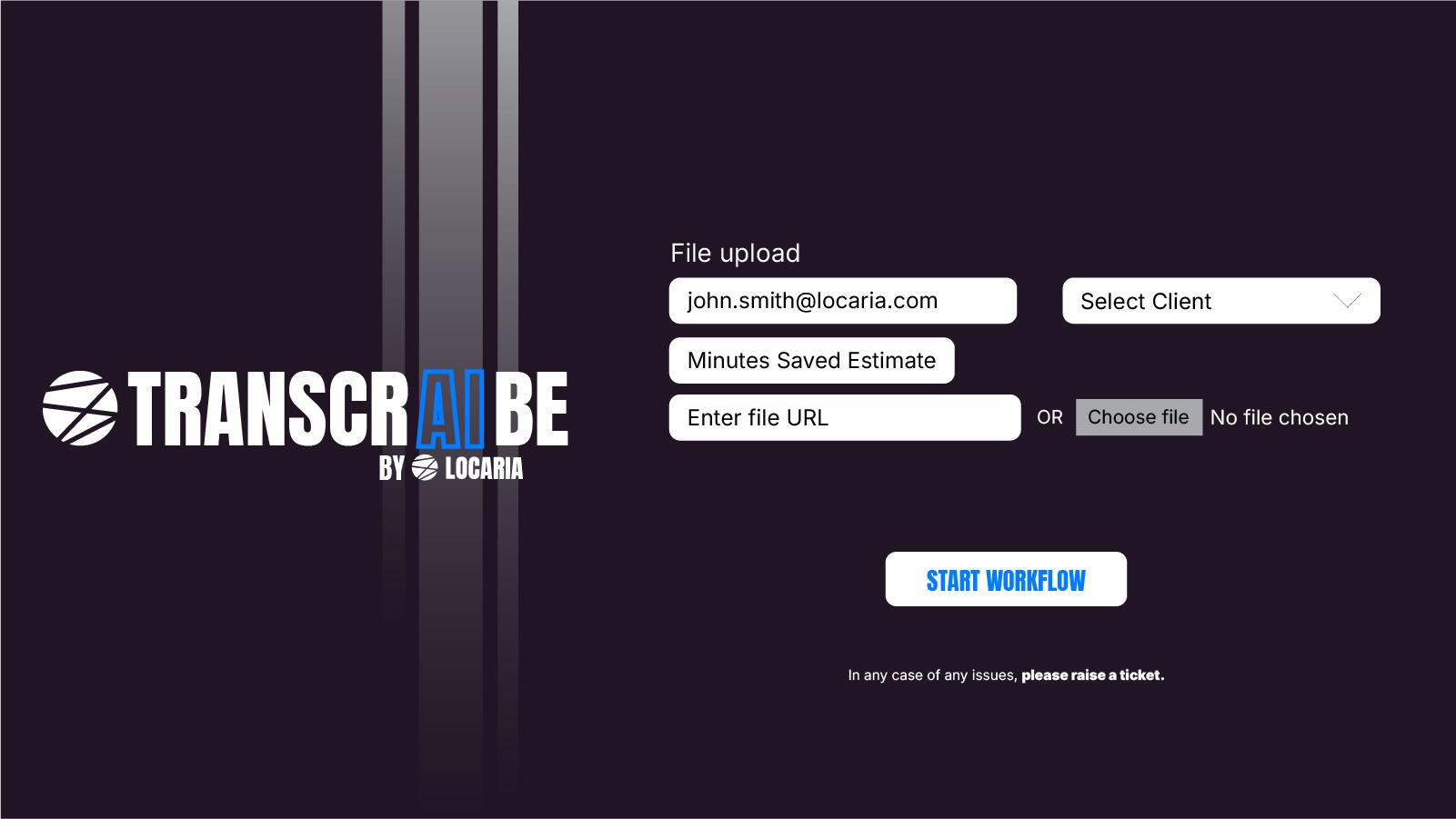
At Locaria, transcription and subtitling were established operational tasks. Work was delivered on time and to specification. However, as volumes increased, the underlying limitations of the process became clear. Quality depended on repeated human correction, tightly coupling speed, cost and accuracy. Traditional transcription tools could not reliably separate dialogue from non-dialogue audio outputs ready for downstream linguistic adaptation, creating a structural constraint the process changes alone could not resolve. TranscrAIbe was developed by reviewing the existing workflow and redesigning it around the outcome required. It combines machine learning for contextual interpretation with rules-based logic where predictability is sufficient. This produces clean, adaptation-ready subtitle outputs at the point of need, with human expertise focused on review and adaptation vs routine correction. Because the new system replaced the previous workflow rather than sitting alongside it, the impact was immediate. Turnaround times reduced materially. Manual re-editing shifted from standard practice to exception handling. Language support expanded significantly, enabling scalable multilingual delivery across a far broader range of markets. Since launch, TranscrAIbe has been adopted across multiple departments and client teams, with sustained usage growth. The solution quickly became cost effective in operation and continues to deliver ongoing savings by removing avoidable rework and reducing dependency on licensed tools. TranscrAIbe reflects a considered approach to AI - applied selectively into everyday operations, and judged by improvements in quality, speed and cost efficiency rather than headline claims.